
Daruma is on the App Store. After eight months, it exists, other people can install it, and I am still slightly surprised about all of that. It is my first app.
What it actually is
Daruma is a planner for the paperwork of living in Japan. Not a phrasebook, not a visa explainer, not another blog. A list of the things you personally have to do, in the order they have to happen, with the deadlines attached.
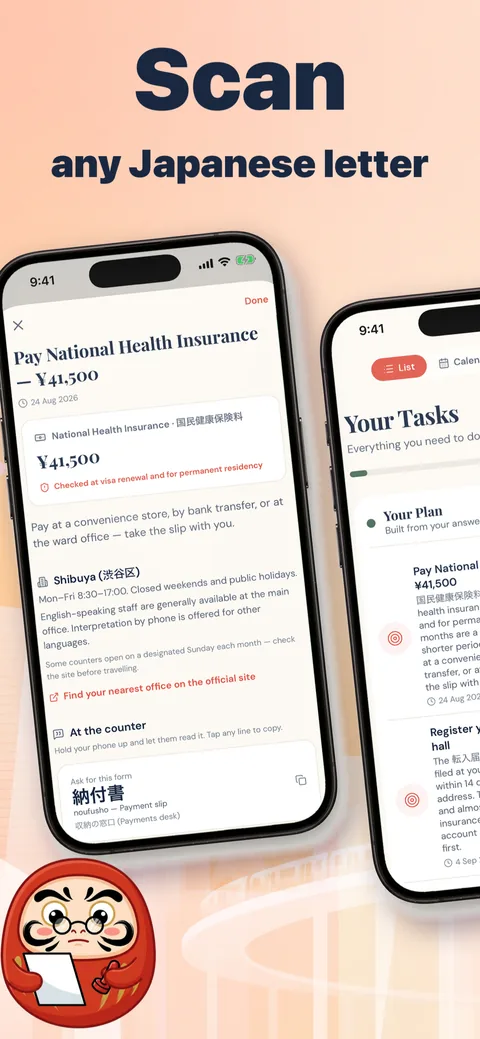
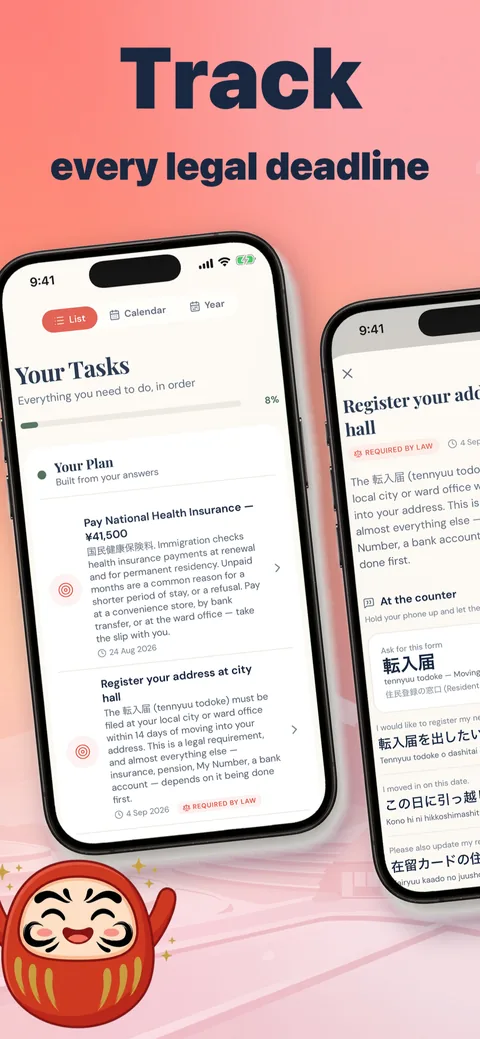
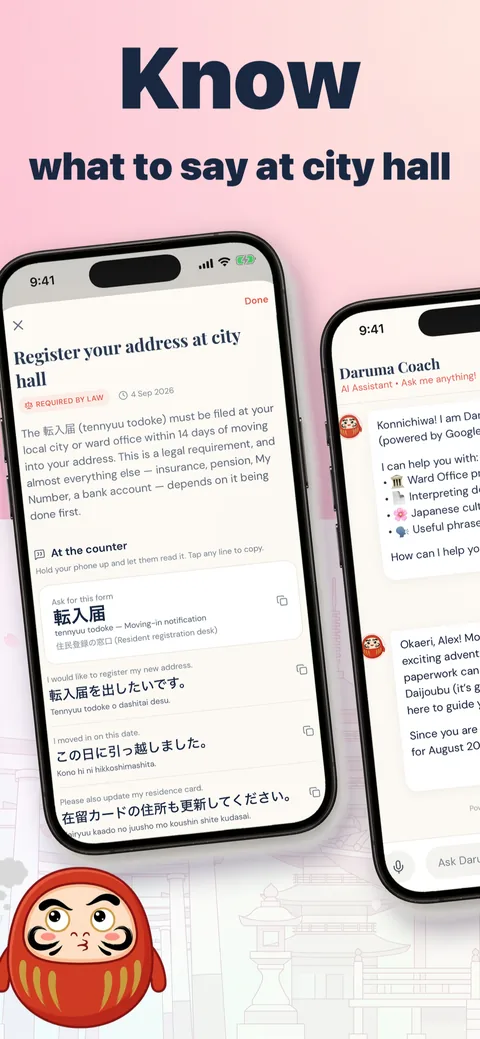
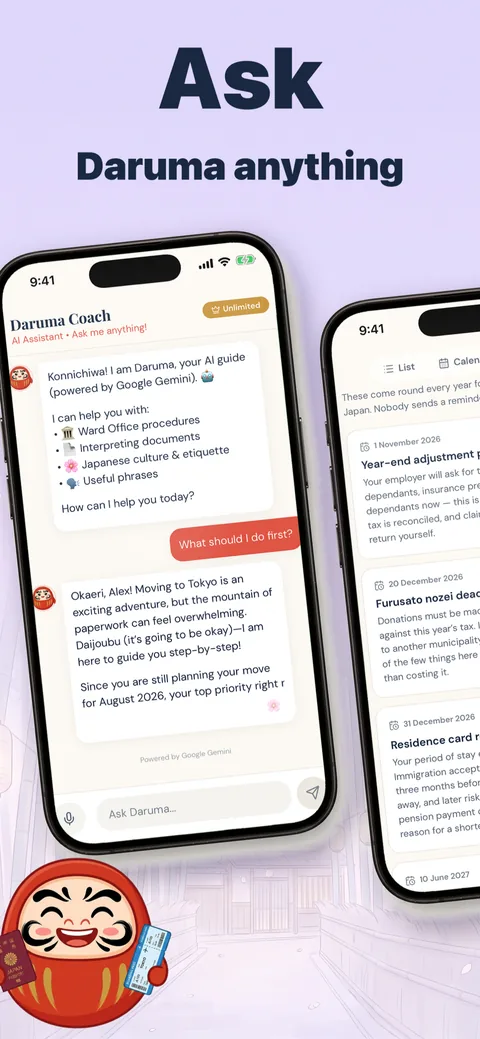
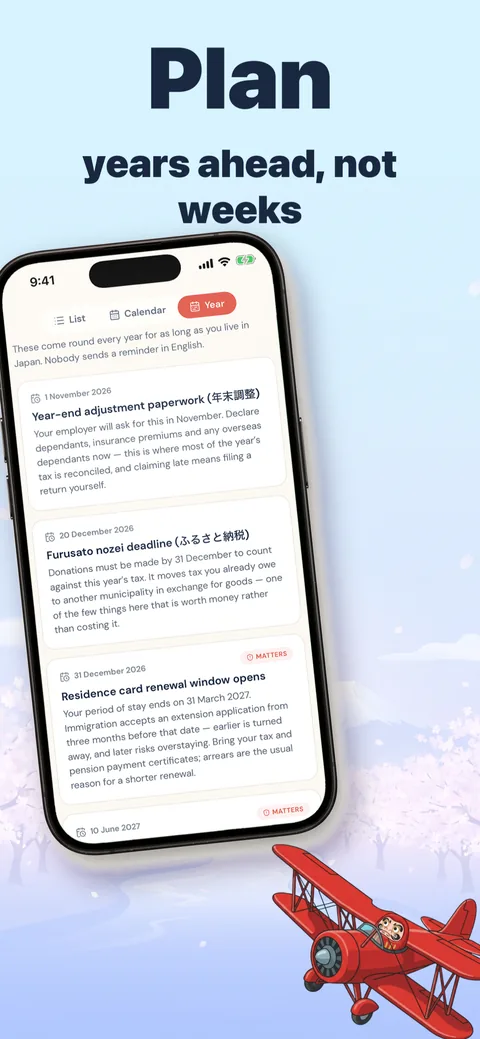
Scroll across. Five things Daruma does.
Point your camera at a letter you cannot read and it will tell you what it is, whether it needs paying, and by when. It knows which ward office counter you need and what floor it is on. And you can ask it questions in plain English, because it already knows your visa, your ward and where you are up to.
Why it exists
I have moved to Japan twice and made a completely different set of mistakes each time.
The first time was almost an accident. I came over on a working holiday from university in Australia, speaking essentially no Japanese, and loved it enough to start studying every day at my local family restaurant. That turned into classes, then an exchange year at Fukuoka University. I got pretty good.
Then several years happened elsewhere, my Japanese quietly packed its bags, and I came back to Tokyo in 2023 for a job in IT, arriving with the confidence of someone who thought he knew the place.
I could not work out what to bring to the immigration office. Neither could my employer, who had never hired a foreigner before. So there we were, two confused parties looking at each other hopefully, each assuming the other had it handled.
And that was just the front door. Everything here connects to everything else. Pay a bill late and it surfaces somewhere you were not expecting. Nobody mentions furusato nozei until the window has shut. Nobody warns you about the second-year residence tax, which lands after you have already built your life around your first-year take-home.
None of it was hard, exactly. It was invisible. Every single piece was findable if you already knew it existed, and impossible if you did not.
Where the idea came from
Around Christmas 2025 the rules for foreign residents changed again, as they keep doing, and I remember thinking: this is genuinely confusing, and I have done it twice. What is it like for someone doing it for the first time, in a language they are still learning, at a company that has never done it either?
What I wanted was not complicated. A planner that knew which documents I needed and when. Something that warned me an appointment was coming while it was still easy to book. And someone I could ask at eleven at night who already knew my situation, so I did not have to explain myself from scratch every time.
Nobody was building it. Eight months later, here it is.
The guides stay free
Everything in this section stays free and needs no account. There are dozens of guides here now, all dated, all specific about what is law and what is only proposed, and I keep them current because out-of-date guidance is worse than none.
The app is the paid part, and it is the part that knows about you rather than about the procedure in general.
What is next
More ward offices, for one. Tokyo is fully covered, the Chiba commuter belt has just landed, and the rest of the country is a steady grind of reading municipal websites in Japanese so that you do not have to.
Beyond that, I mostly want to hear what breaks. If you find something wrong, out of date, or missing, there is a Send feedback button in the app and I read every one of them.
Thank you for reading. It is a strange feeling, shipping the first one.
Guides are dated rather than undated: last reviewed 13 September 2026. This is an organisational aid, not legal or immigration advice — always confirm anything consequential with your ward office, the Immigration Services Agency, or a qualified professional.